Training Tip: Mare Can’t Do the Sending Exercise
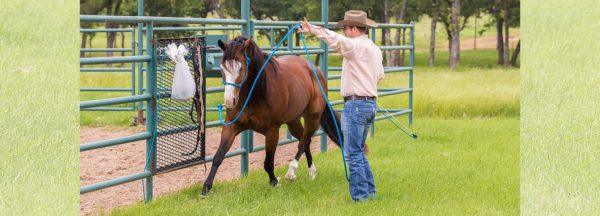
Question: When I try doing the Sending Exercise with my mare and don’t let her come up to me after each yield, she will go through the gap and yield and want to come up to me. I back her up and send her through the other way, but after about two or three times of being yielded and being backed up to keep her from coming into my personal space, she gets all bent out of shape. She starts running around behind me after she yields as soon as I try to change hands with the lead rope and stick, or she anticipates and tries rushing through the gap again. She also gets worked up and starts to anticipate and acts nervous about the stick on all of the other groundwork exercises, even though she is very relaxed as soon as I start desensitizing her. – Jonathan H.
Clinton’s Answer: It’s difficult to tell exactly what is happening without watching you work with your mare in person. However, from what you’re describing, it sounds like you’re being too aggressive with the stick and need to tone down your cues and corrections.
During the Sending Exercise, you never want your horse to yield and come up to you. So you were correct in backing her out of your space when she came up to you without you asking her to. As soon as the horse starts walking in toward you, wiggle the rope and wave your stick back and forth in front of you to keep her on the outside of your hula hoop space.
If you’re working with a sensitive horse, that amount of pressure will be enough for her to stop walking toward you and back out of your space. If you’re working with a duller horse, you may have to whack her on the chest or whack her under the jaw with the stick in order for her to take you seriously and step out of your space. That’s fine. Do what you have to do to get the job done. Do it as easy as possible, but as firm as necessary.
Everything with horses requires feel and timing. When you’re cueing your horse, no matter which exercise you’re working on, always start gently and increase the pressure until the horse responds. However, if you know you’ve already made the horse feel uncomfortable, then just continue to maintain that pressure until she figures out the answer.
If you apply too much pressure, the horse will only think about that and not about how to figure out the exercise. She’ll think more about the punishment than how to solve the puzzle. Our job in training a horse is to make the wrong thing difficult and the right thing easy. If you put too much pressure on the horse, she will get frightened and confused. If you don’t use enough pressure, she will ignore you and not try to find the answer.
Have a horsemanship question or looking for more training tips? Check out the No Worries Club.
